Buying your first superbike is one of the most exciting milestones for any motorcycle enthusiast. The sound of a high-performance engine, the aggressive styling, and the thrill of acceleration make superbikes a dream for riders around the world. However, purchasing your first superbike is not just about choosing the fastest or most expensive motorcycle. It is about finding a bike that matches your riding skills, budget, and long-term goals.
Many new riders make the mistake of buying a motorcycle that is too powerful for their experience. While a 1000cc superbike may look attractive, controlling such a machine requires advanced riding skills and confidence. Choosing the right motorcycle will help you improve your riding abilities, stay safe, and enjoy every ride.
In this guide, we’ll explain everything you need to know before buying your first superbike, including engine size, riding position, safety features, maintenance costs, and common mistakes to avoid.
Why Choosing the Right Superbike Matters
A superbike is a significant investment, and selecting the wrong one can lead to frustration, higher maintenance costs, or even safety issues. The right motorcycle should inspire confidence rather than fear.
A beginner-friendly superbike allows you to develop essential riding skills while enjoying strong performance. As your experience grows, you can later upgrade to a more powerful machine.
1. Understand Your Riding Experience
The first question to ask yourself is:
How much riding experience do I already have?
If you currently ride a 150cc, 200cc, or 250cc motorcycle, jumping directly to a 1000cc superbike is generally not recommended. High-performance motorcycles produce immense power and require refined throttle control, braking skills, and cornering techniques.
A middleweight motorcycle offers enough performance to keep you excited while remaining manageable for everyday riding.
2. Choose the Right Engine Capacity
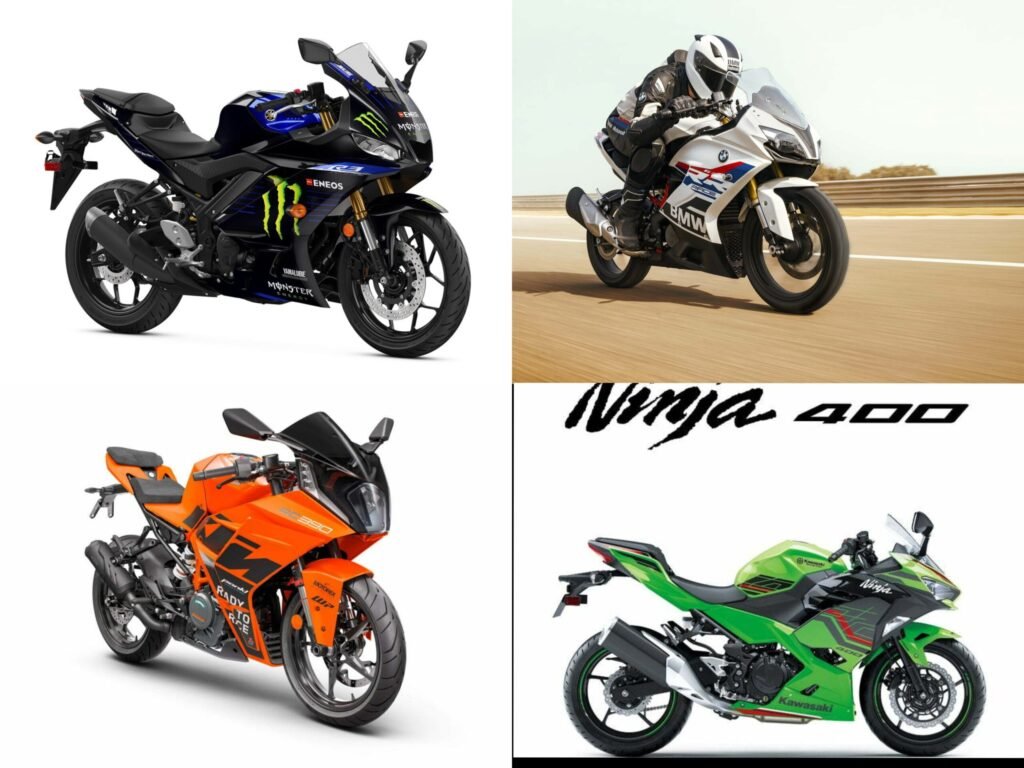
Engine size has a major impact on how a motorcycle behaves.
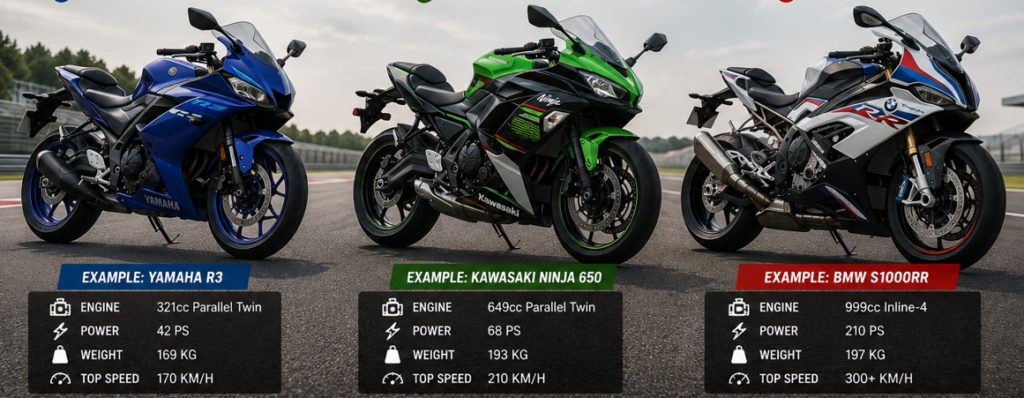
300cc–500cc
Best for beginners.
Advantages:
- Easy to handle
- Lower maintenance costs
- Good fuel economy
- Lightweight
- Ideal for city and highway riding
Examples:
- Yamaha R3
- Aprilia RS 457
- KTM RC 390
650cc–700cc
Perfect for riders upgrading from smaller motorcycles.
Advantages:
- Strong acceleration
- Comfortable for touring
- Suitable for daily use
- Excellent balance of power and control
Examples:
- Kawasaki Ninja 650
- Honda CBR650R
- Triumph Daytona 660
1000cc and Above
Designed for experienced riders.
Advantages:
- Incredible acceleration
- Track-ready performance
- Advanced electronics
- Premium components
Examples:
- BMW S1000RR
- Kawasaki ZX-10R
- Ducati Panigale V4
3. Set a Realistic Budget
The purchase price is only one part of ownership.
You should also budget for:
- Insurance
- Registration
- Riding gear
- Fuel
- Engine oil
- Tyres
- Servicing
- Accessories
- Unexpected repairs
Planning for these costs ensures a better ownership experience.
4. Consider Maintenance Costs
Premium motorcycles require more maintenance than regular commuter bikes.
Before buying, research:
- Service intervals
- Spare part prices
- Engine oil costs
- Tyre replacement
- Dealer availability
Some brands have higher maintenance costs than others, so choose one that fits your long-term budget.
5. Choose a Comfortable Riding Position
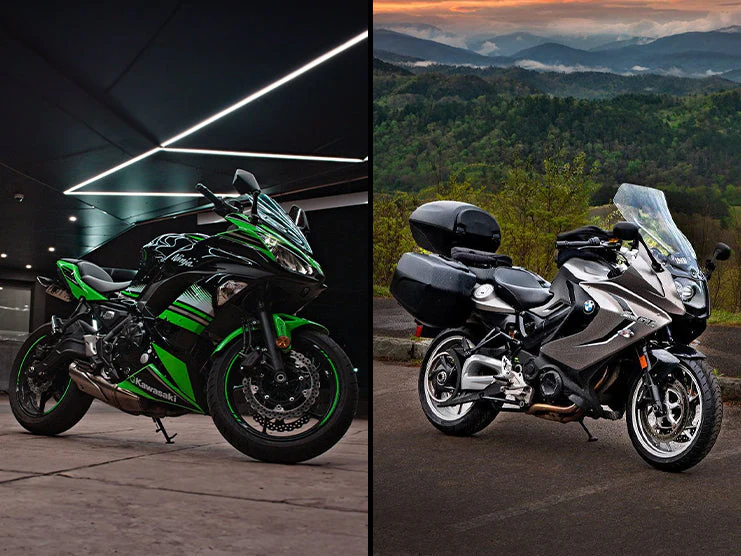
Not every superbike is equally comfortable.
Sport Bikes
Pros:
- Excellent aerodynamics
- Great handling
- Ideal for track riding
Cons:
- Aggressive posture
- Wrist pressure in traffic
- Less comfortable on long city rides
Sport-Touring Bikes
Pros:
- Comfortable seating
- Better wind protection
- Relaxed ergonomics
- Suitable for long-distance rides
If you plan to ride frequently on highways, a sport-touring motorcycle may be the better option.
6. Look for Modern Safety Features
Modern electronics make riding safer and more enjoyable.
Important features include:
- Dual-Channel ABS
- Traction Control
- Riding Modes
- Quick Shifter
- Slipper Clutch
- Wheelie Control
- Cornering ABS
- TFT Display
These technologies improve stability and give riders greater confidence in different road conditions.
7. Buy Proper Riding Gear First
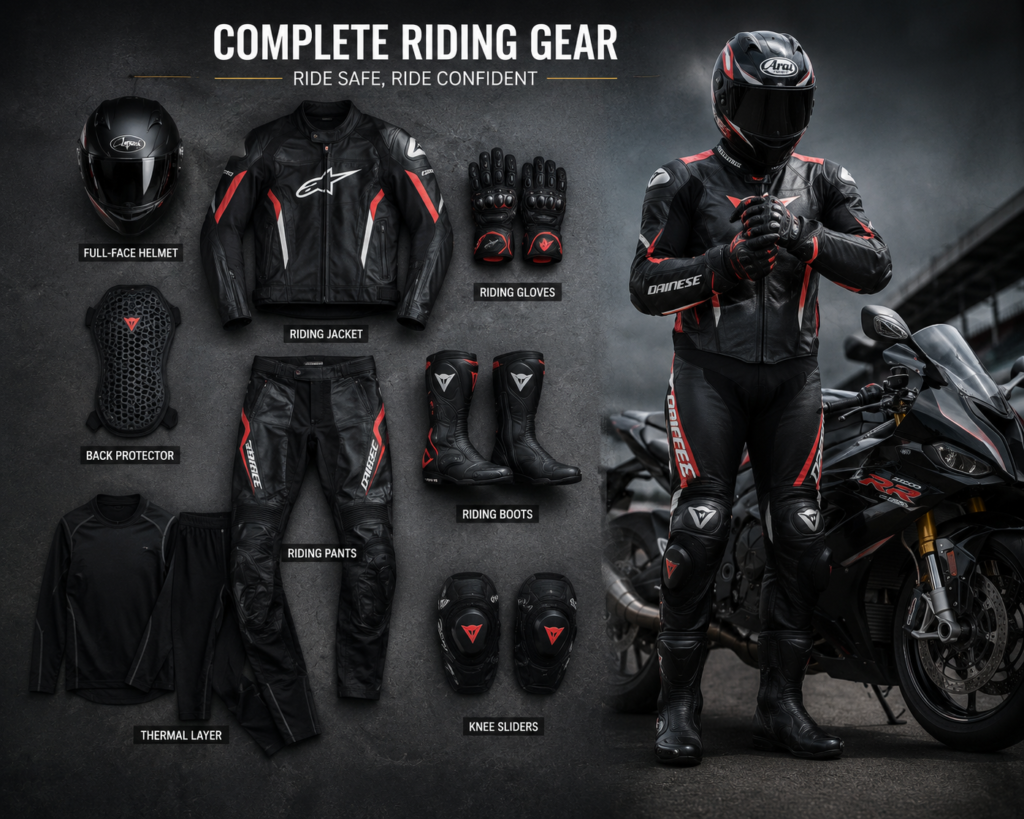
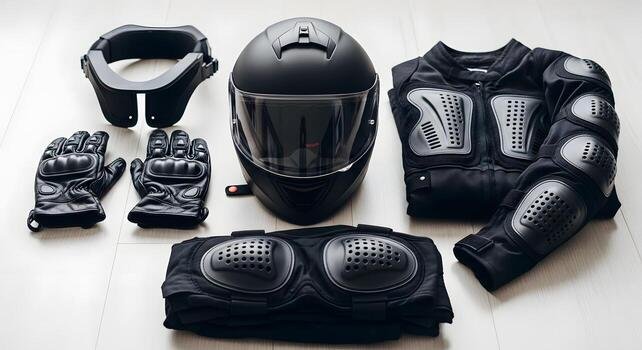
A superbike should never be ridden without quality protective gear.
Essential equipment includes:
- Full-face certified helmet
- Riding jacket
- Riding gloves
- Riding boots
- Riding pants
- Back protector
Good riding gear is just as important as the motorcycle itself.
8. Take a Test Ride
Never buy a motorcycle without riding it first.
During the test ride, pay attention to:
- Seat height
- Handlebar comfort
- Weight balance
- Engine smoothness
- Clutch feel
- Braking performance
- Suspension comfort
- Visibility
A short ride can tell you more than hours of reading specifications.
9. Think About Long-Term Ownership
Ask yourself:
- Is there an authorized service center nearby?
- Are spare parts easily available?
- Is the resale value good?
- Can I comfortably afford annual maintenance?
A practical ownership experience is just as important as performance.
10. Don’t Buy Based Only on Looks
Many riders choose a motorcycle simply because it looks aggressive or has the highest top speed.
Instead, consider:
- Reliability
- Comfort
- Maintenance
- Fuel efficiency
- Availability of service
- Ease of riding
The best superbike is the one that suits your needs—not necessarily the most powerful one.
Common Mistakes Beginners Make
Avoid these common errors:
- Buying a bike that is too powerful
- Ignoring maintenance costs
- Skipping protective riding gear
- Riding beyond your skill level
- Choosing style over comfort
- Not taking a test ride
- Neglecting regular servicing
Learning from these mistakes can save money and improve safety.
Best First Superbikes for Beginners
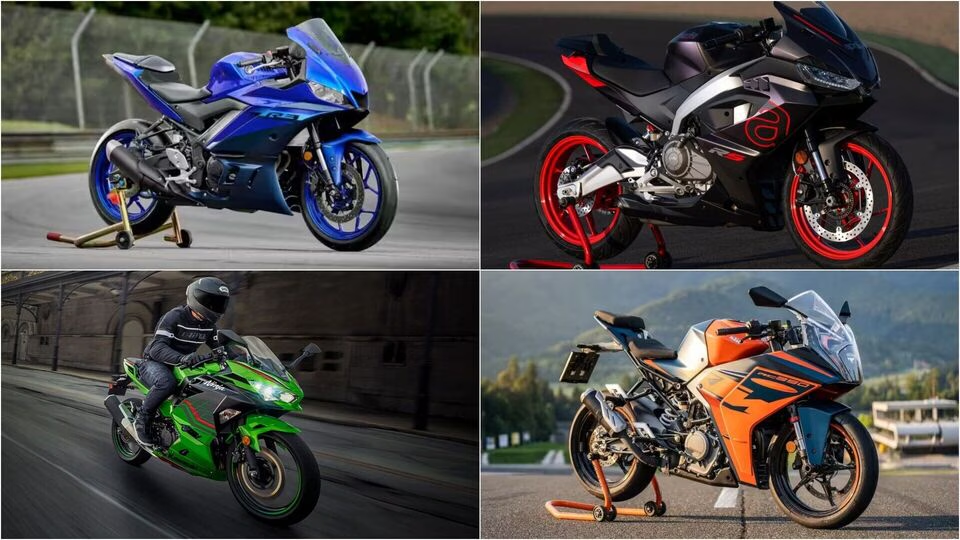
Here are some excellent choices for riders entering the superbike segment:
| Motorcycle | Engine | Best For |
| Yamaha R3 | 321cc | Beginners |
| Aprilia RS 457 | 457cc | Sport Riding |
| Kawasaki Ninja 650 | 649cc | Daily + Touring |
| Honda CBR650R | 649cc | Premium Experience |
| Triumph Daytona 660 | 660cc | Highway Riding |
These motorcycles provide a great mix of performance, reliability, and manageable power.
Frequently Asked Questions (FAQs)
Is a 1000cc superbike suitable for beginners?
No. Most beginners are better served by a 300cc–650cc motorcycle that allows them to build skills safely.
What is the ideal engine size for a first superbike?
A motorcycle in the 300cc to 650cc range is generally the best starting point for most new riders.
Should I buy a new or used superbike?
A well-maintained used superbike can offer excellent value, provided it has a clear service history and passes a thorough inspection.
How important is riding gear?
Extremely important. A certified helmet and proper protective gear significantly reduce the risk of serious injury.
Which beginner superbike offers the best balance?
The Kawasaki Ninja 650 and Honda CBR650R are often recommended because they combine performance, comfort, and reliability.
Final Verdict
Choosing your first superbike is about finding the right balance between performance, comfort, safety, and affordability. A motorcycle that matches your experience level will help you become a more confident and skilled rider while making every journey enjoyable.
Take your time, compare different models, ride them if possible, and think beyond just horsepower or top speed. Consider long-term ownership costs, maintenance, and how you actually plan to use the bike.
Your first superbike is the beginning of an exciting journey. Choose wisely, invest in quality riding gear, continue learning, and always ride responsibly.
For more superbike reviews, buying guides, comparisons, and expert motorcycle tips, visit SuperBikeReviews.com and stay connected with the world of high-performance motorcycles.